

CASTELLO DI RIVOLI
WEBSITE: WWW.CASTELLODIRIVOLI.ORG
LOCATION: PIAZZA MAFALDA DI SAVOIA, 10098 RIVOLI, TORINO, ITALY
NEAREST AIRPORTS: TORINO AIRPORT, 30 MINUTES DRIVE
The architecture of Castello di Rivoli, home to Turin’s Museo d’Arte Contemporanea, is the first thing you notice as you approach above the city. First mentioned in the ninth century, the site has been built, rebuilt, burnt, bombed, abandoned, and destroyed by passing armies over more than ten centuries. Rather than conceal this turbulent past, the modern restoration embraces it, weaving partial ruins and unfinished interventions into a layered narrative of prosperity and destruction.
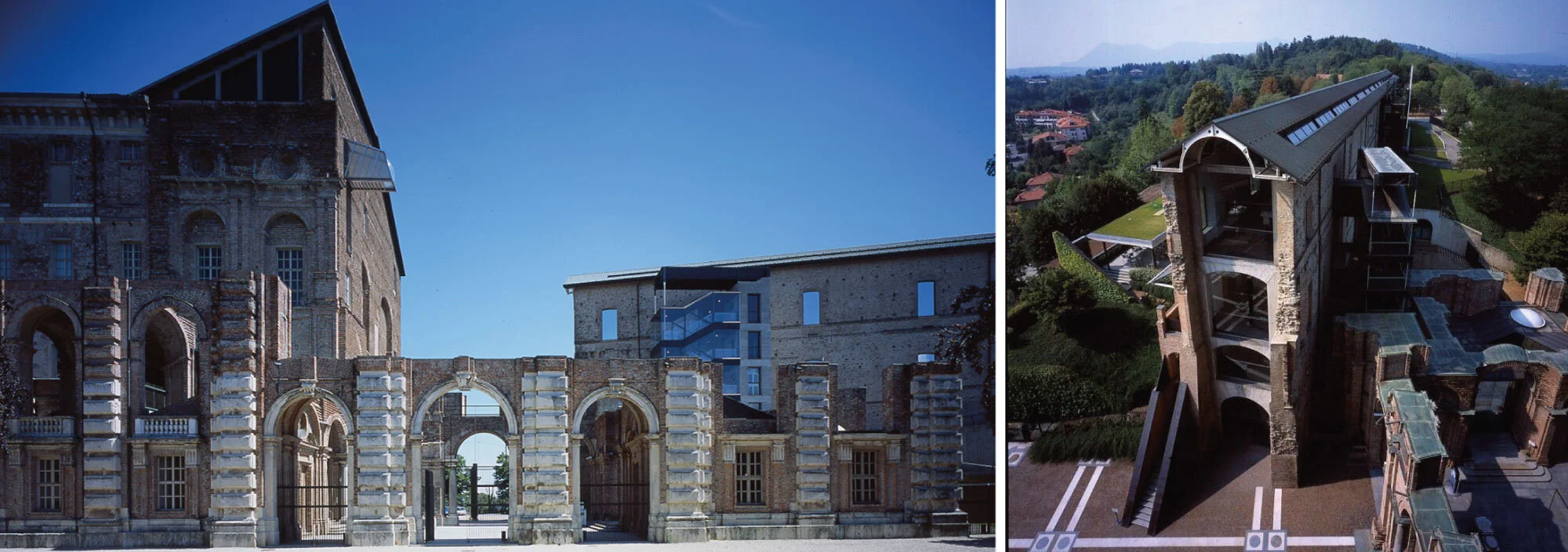
Left: Castello di Rivoli exterior. Right: the Manica Lunga building.
While the history of the building itself can be explored in depth on the museum’s website, the primary draw today is the contemporary art museum, which opened in 1984. It is an ambitious institution committed to engaging local and international audiences in a deeper understanding of the present through art and culture, while contributing to the social life of the region. What sets it apart is that it fulfils this mission without becoming didactic, a trap many museums now fall into.

Left: Manica Lunga building. Right: Interior view of Manica Lunga
The collection is strong and thoughtfully displayed across former salons, the Manica Lunga (long sleeve), and the surrounding grounds. Innovative exhibitions and radical performances have been staged here for decades, always with sensitivity to the historic fabric of the castle. Artists represented include Gilbert and George, Nan Goldin, Mona Hatoum, Pierre Huyghe, William Kentridge, and Ed Atkins.

Interior gallery views in the main palace building.
The exhibition programme has been consistently impressive, addressing urgent global themes while introducing local audiences to the international art scene through exhibitions such as the Sigg Collection. At the same time, the museum continues to present artists whose work is driven by formal and philosophical concerns rather than overt politics, as seen in the recent exhibition devoted to Giorgio Morandi. The balance between conceptual practice and more painterly or sculptural work is carefully judged.

Interior gallery views in the main palace building.
Castello di Rivoli has also acquired the estate of Francesco Federico Cerruti, located a short drive from the main site. Free shuttle buses take visitors to the house, preserved as Cerruti left it, with a collection ranging from medieval works to contemporary art. Largely reclusive during his lifetime, Cerruti showed the collection to very few people. Playing the voyeur is part of the pleasure, but there are genuine masterpieces throughout, along with a rather tempting wine cellar.

The Cerruti Collection, interior and exterior.
If you are in Turin, Castello di Rivoli is well worth a few hours of your time. It is both imaginative and beautiful, with expansive views and much to stimulate the mind. Every Saturday and Sunday, a free shuttle connects Piazza Castello in central Turin with the museum, stopping at Porta Susa railway station along the way.